1. Women as viewed by men: In 'The Tiger's Bride' the girl is handed over from the father to The Beast because "My father lost me to The Beast at cards". The only remorse from the Father is that he has lost "my pearl beyond price" with no mention of the daughter's fate in the hands of a foreign lord. The Beast appears to want to 'corrupt' the daughter through his male gaze, although this results in "one single tear swelled, glittering, at the corner of the masked shame". Consequently, there may be conflict between The Beast's mask of masculinity in viewing women as sexual objects and his true 'wild' self which has no such constraints in gender roles. There is also the mechanical maid, which the valet describes as finding it "no less convenient than do most gentlemen", suggesting that women in traditional gender roles do not need emotion. The feminist interpretation of this is that in the eyes of men, women can perform their conventional duties as clockwork and without emotion as they are always seen as possessions of men.
2. The Beast: Although described as a 'beast', is not necessarily a negative male character. His is visibly ashamed of his request to see the girl naked and allows her to see him naked. It is as though The Beast regards nakedness not as something sexual but rather a case of natural equality.
The Beast is a wealthy individual, although he has "bought solitude, not luxury, with his money". Wealth is yet another reminder of humanity, so he surrounds himself with nature- the horses given use of the dining room, the valet being a monkey- and even has pictures "propped with their faces to the walls". Perhaps The Beast is ashamed of his link with humanity, with its cruelty and inequalities, and solitude is his only form of escape.
3. The Girl: Like most of Carter's women, she is young, innocent and virginal. This is what makes her desired- The Beast wants to see "'The sight of a young lady's skin that no man has seen before'" and therefore her only real item of value. Her reply to The Beast's request is that she will pull her skirt up to her waist but that "there must be a sheet over my face"- indicating perhaps that she wants to shame The Beast, as he will be looking at her for purely sexual pleasure, nothing else. When she decides to stay with The Beast, his "thick, rich, wild scent" transforms into a "reek of fur and piss", suggesting that though the world of beasts is not as aesthetic it is at least 'true' in that there is no mask of humanity to create any illusions of wealth or morals.

Monday, 14 May 2012

Tuesday, 8 May 2012
Feral Children
A feral child is one who has lived apart from human society from an early age, so they cannot display the normal signs of human activity; speech, showing emotion like smiling, or even walking. Some have been imprisoned by parents, whilst others appear to have been living wild in forest or jungle. The behaviour of the children seems to be dictated by the animals they survived, so a Russian boy found in 2008 behaved as though he was a bird (chirping and flapping his arms) and an Indian boy in 1867 who was found living in a cave with wolves and would eat raw meat. 'Real' cases of feral children have resulted in children who have appeared mentally or physically impaired and largely or completely lacking in social skills needed for human interaction.
However, when it comes to fictional cases or those from legends, a very different image is created. These children, like Mowgli from 'The Jungle Book' or Romulus and Remus from Roman mythology, actually have few animal characteristics. Instead, they share human morals and intelligence, and are often able to easily fit into human society. They also often have superior strength and survival instincts and even what appears to be an improved sense of morality. Therefore, such feral children can be shown to symbolise the 'noble savage', where humanity is in its pure and least corrupted state.
Monday, 7 May 2012
Significant features of 'The Courtship of Mr Lyon'
1.Magic or wealth?- Mr Lyon's home is a mysterious, almost magical place; a "door of a cloakroom opened of its own accord", there are what seems to be "invisible gardeners" and a dog with its head "intelligently cocked", as though it understood what to do. Furthermore, the food has the legends "Drink me" and "Eat me", similar to Alice in Wonderland. All this seems to provoke the question of whether this is clear reality; it could be magic that makes the dog act as though it was human or the doors open on their own, although wealth could buy many things associated with magic and it is clear the Beast is very wealthy. Therefore, the line between reality and fantasy is blurred by these fairy-tale occasions which creates suspension of disbelief, for example, a dog could clearly understand people if it was expensively trained.
2.The role of the girl- Beauty is the defining character of the story around whom the other characters centre. The Father is only recognised as "Beauty's Father" rather than any of his own characteristics so that his role is to support Beauty by providing her with the means to meet the Beast. The Beast is saved by Beauty, in contrast to the Gothic convention of having a strong male saving the weak female. Instead, a young and virginal female saves a weakened male who needs (not just desires) such a girl. However, Beauty is still punished for her 'crime' of not returning to the Beast, demonstrating that female crimes will always go punished by men. In addition, Beauty is described as "Miss Lamb, spotless, sacrificial". This could be associated with the 'lion will lie down with the lamb' idea of heaven, suggesting that the Beast's appearance should not be feared by Beauty.
3. The Beast- Contrary to other stories in 'The Bloody Chamber', this powerful male character is not the archetypal aggressive Gothic protagonist. While it is true that he has the "mane and mighty paws of a lion" and that he demands to see the girl at dinner, he does not attempt to corrupt her or harm her- rather, "buried his head in her lap", which suggest more submission than power. The tale concludes by the Beast transforming into a man by Beauty's kiss, as though he has been trapped in this beast-like appearance which he can only escape from through compassion. Perhaps the Beast is a contrast to the other 'Beast' characters in 'The Bloody Chamber' because he does not want the 'mask' he is provided with, whereas the other use this mask for deception or to hide their true selves.
2.The role of the girl- Beauty is the defining character of the story around whom the other characters centre. The Father is only recognised as "Beauty's Father" rather than any of his own characteristics so that his role is to support Beauty by providing her with the means to meet the Beast. The Beast is saved by Beauty, in contrast to the Gothic convention of having a strong male saving the weak female. Instead, a young and virginal female saves a weakened male who needs (not just desires) such a girl. However, Beauty is still punished for her 'crime' of not returning to the Beast, demonstrating that female crimes will always go punished by men. In addition, Beauty is described as "Miss Lamb, spotless, sacrificial". This could be associated with the 'lion will lie down with the lamb' idea of heaven, suggesting that the Beast's appearance should not be feared by Beauty.
3. The Beast- Contrary to other stories in 'The Bloody Chamber', this powerful male character is not the archetypal aggressive Gothic protagonist. While it is true that he has the "mane and mighty paws of a lion" and that he demands to see the girl at dinner, he does not attempt to corrupt her or harm her- rather, "buried his head in her lap", which suggest more submission than power. The tale concludes by the Beast transforming into a man by Beauty's kiss, as though he has been trapped in this beast-like appearance which he can only escape from through compassion. Perhaps the Beast is a contrast to the other 'Beast' characters in 'The Bloody Chamber' because he does not want the 'mask' he is provided with, whereas the other use this mask for deception or to hide their true selves.
Sunday, 29 April 2012
Features of The Bloody Chamber
Most significant features of The Bloody Chamber:
1.The Mother: Arguably the most powerful character (able to kill even the Marquis) yet is a woman. Achieves this through her husband's weapon (he he he) and "put a single, irreproachable bullet through my husband's head". Therefore power is still attained with a man's help. However, has her "maternal telepathy" which is only a feminine thing so perhaps shows feminine power by itself is underestimated?
2.Sex: Marquis is the dominant force whilst the girl has to remain passive- it is a "one-sided struggle". The Marquis is the one who gets pleasure from it but she has been "infinitely dishevelled by the loss of my virginity". The Marquis has corrupted her as is shown through the loss of her virginity yet treats her as though she is the one who has left herself open to corruption, referring to her as a "whore" and calling her execution "martyrdom".
3.The Piano-tuner: Blind so does not look upon the Marquise with the 'male gaze' or lust. Contrary to conventional fairytale as is the male lover but cannot play an active role in the Marquise's rescue. Young so is unable to corrupt whilst the Marquis can. Also, cannot see the "shame" of the girl's red mark ("mark of Cain"), perhaps suggesting her weakness in disobeying men?
4.Religion: Not much on this, but I'll give it a shot. The Marquis' castle is run on a feudal system, with him at the top. His position means he can control all those within his 'realm' ("Might not the police, the advocates, even the judge, be all in his service", "he was milord whose word must be obeyed") as an almost God-like figure. Ancestral power (his "great-grandfather's ceremonial sword" and the ruby choker) gives a sort of pre-determination to his actions and the execution itself is carried out using religious terminology ("last rites, the sacrifice"). Within his castle, he is basically God and so has power over life and death.
5.Aspects of the Gothic: I suppose this is the most important bit. Takes place in a castle and has relics passed down from ancestors- old so has permanence and knowledge, making it easier to corrupt. The male threat is omnipotent within his own world corrupts the woman. Madonna/whore complex (at least in the eyes of the Marquis) as the Marquise has willingly succumbed to the Marquis. Punishment of 'sins'- "she died soon after" suggesting the old nurse died as a consequence of her pride in the girl's marriage; the Marquise to be executed for disobeying her husband's command and the Marquis himself being shot for his crimes.
1.The Mother: Arguably the most powerful character (able to kill even the Marquis) yet is a woman. Achieves this through her husband's weapon (he he he) and "put a single, irreproachable bullet through my husband's head". Therefore power is still attained with a man's help. However, has her "maternal telepathy" which is only a feminine thing so perhaps shows feminine power by itself is underestimated?
2.Sex: Marquis is the dominant force whilst the girl has to remain passive- it is a "one-sided struggle". The Marquis is the one who gets pleasure from it but she has been "infinitely dishevelled by the loss of my virginity". The Marquis has corrupted her as is shown through the loss of her virginity yet treats her as though she is the one who has left herself open to corruption, referring to her as a "whore" and calling her execution "martyrdom".
3.The Piano-tuner: Blind so does not look upon the Marquise with the 'male gaze' or lust. Contrary to conventional fairytale as is the male lover but cannot play an active role in the Marquise's rescue. Young so is unable to corrupt whilst the Marquis can. Also, cannot see the "shame" of the girl's red mark ("mark of Cain"), perhaps suggesting her weakness in disobeying men?
4.Religion: Not much on this, but I'll give it a shot. The Marquis' castle is run on a feudal system, with him at the top. His position means he can control all those within his 'realm' ("Might not the police, the advocates, even the judge, be all in his service", "he was milord whose word must be obeyed") as an almost God-like figure. Ancestral power (his "great-grandfather's ceremonial sword" and the ruby choker) gives a sort of pre-determination to his actions and the execution itself is carried out using religious terminology ("last rites, the sacrifice"). Within his castle, he is basically God and so has power over life and death.
5.Aspects of the Gothic: I suppose this is the most important bit. Takes place in a castle and has relics passed down from ancestors- old so has permanence and knowledge, making it easier to corrupt. The male threat is omnipotent within his own world corrupts the woman. Madonna/whore complex (at least in the eyes of the Marquis) as the Marquise has willingly succumbed to the Marquis. Punishment of 'sins'- "she died soon after" suggesting the old nurse died as a consequence of her pride in the girl's marriage; the Marquise to be executed for disobeying her husband's command and the Marquis himself being shot for his crimes.
Tuesday, 20 March 2012
The Green Man
The Green Man has adorned English churches for over 1000 years, but no-one has been able to say for sure what it is or anything about its origins. It has been connected with Christianity since the 6th century but the links between man and nature are more of a pagan concept. It is likely, then, that this figure or god was adopted by the early Christian Church as a Christian concept. It was perhaps adapted to represent the cycle of life from death which can be overcome by Faith in God and heaven. It has also been suggested that the Man is in fact Adam as seeds were placed in his mouth after his death, from which grew the burning bush that Moses spoke to.
There is another theory that the Green Man is a 'Jack-in-the-Green' which was a man inside a framework adorned with leaves. Jack-in-the-Green was assocaited with May Day celebrations and Morris dancing, so symbolises the beginning of Spring and the renewal of life. However, the Green Man is not only found in England, but figures have been found in cathedrals and fountains across in Europe, and even in cultures as far away as Nepal and the Ancient Egyptian god Osiris (god of the underworld) was coloured green. So the exact origins of this mysterious figure remains unknown, although several theories place him in the region of death leading to re-birth but the precise origins evade us...
There is another theory that the Green Man is a 'Jack-in-the-Green' which was a man inside a framework adorned with leaves. Jack-in-the-Green was assocaited with May Day celebrations and Morris dancing, so symbolises the beginning of Spring and the renewal of life. However, the Green Man is not only found in England, but figures have been found in cathedrals and fountains across in Europe, and even in cultures as far away as Nepal and the Ancient Egyptian god Osiris (god of the underworld) was coloured green. So the exact origins of this mysterious figure remains unknown, although several theories place him in the region of death leading to re-birth but the precise origins evade us...
Friday, 16 March 2012
Wealth/loneliness in 'The Tiger's Bride'
So we're supposed to write about something interesting in 'The Tiger's Bride'. For me, one interesting element is the association of the Beast's loneliness with his wealth. He "bought solitude, not luxury, with his money", indicating that for him wealth is not something that can be compared to material beauty. Rather than providing for a large number of human guests that could be accommodated with his money, he instead opens up his dining room to be used by horses. He seems to find company in nature, as he covers up portraits whilst leaving the frescoes which are reminiscent of Paradise where animals are equal to men (and of course where the lion lies down with the lamb).
Therefore, it is clear that nature matters to the Beast much more so than his material possessions. He doesn't have any human servants, preferring to employ clockwork maids and his monkey manservant. Distancing himself from the human world is, ironically, achieved through his wealth enabling him to have the "megalomaniac citadel of his palazzo" but he doesn't enjoy any of the comfort this brings and resides in his "eyrie" with a "small fire in a small grate". For the Beast, wealth is associated with human contact so he avoids the visible signs as much as possible. This way, he can separate humanity from nature, which is regarded as 'true beauty'- seen as Beauty's human skin is turned into "a nascent patina of shining hairs".
Therefore, it is clear that nature matters to the Beast much more so than his material possessions. He doesn't have any human servants, preferring to employ clockwork maids and his monkey manservant. Distancing himself from the human world is, ironically, achieved through his wealth enabling him to have the "megalomaniac citadel of his palazzo" but he doesn't enjoy any of the comfort this brings and resides in his "eyrie" with a "small fire in a small grate". For the Beast, wealth is associated with human contact so he avoids the visible signs as much as possible. This way, he can separate humanity from nature, which is regarded as 'true beauty'- seen as Beauty's human skin is turned into "a nascent patina of shining hairs".
Tuesday, 6 March 2012
Characters of commedia dell'arte
Commedia dell'arte originated in Italy to counter the strict conventions of classic theatre. Instead, commedia dell'arte abandoned such rules and allowed actors room for improvisation and brought in characters who were loud and colourful, rather than the flat characters of classical theatre. There are a variety of these characters, who I suppose can be called caricatures of certain people and classes.
Harlequin: the best known of these stock characters with his patched outfit and mask. He is basically a trickster, and, though he is poor, is able to survive through his wit and creativity.
Scaramouche (Scaramouche, can you do the Fandango?): a captain who doesn't seem to do much fighting (his name meaning small,fast fray) and is more of a ladies man. He is clever (but also lucky) enough to escape out of any awkward situations he finds himself in and hand the blame to somebody else.
Pantaloon: an old, greedy merchant who does all he can to keep his money. He is opposite to the Harlequin, who is young and poor but is able to trick the Pantaloon out of his gold.
The Doctor: known as Balanzone, he is rich, fat and thinks he knows everything. His meaningless dialogues may contain (wrong) citations in Latin or Greek and he impersonates any important person, whether it is a doctor, or more likely a lawyer or judge. This character allows a break in the running of the commedia dell'arte and is the sort of 'know-it-all' character that the audience can resent.
Innamorati: pair of lovers (often the son and daughter of the Pantaloon and the Doctor) who are important in the commedia dell'arte as their situations (eg. contrasted love and envy) give rise for the entrance of the more comedic characters, in particular the Harlequin and Pantaloon.
Harlequin: the best known of these stock characters with his patched outfit and mask. He is basically a trickster, and, though he is poor, is able to survive through his wit and creativity.
Scaramouche (Scaramouche, can you do the Fandango?): a captain who doesn't seem to do much fighting (his name meaning small,fast fray) and is more of a ladies man. He is clever (but also lucky) enough to escape out of any awkward situations he finds himself in and hand the blame to somebody else.
Pantaloon: an old, greedy merchant who does all he can to keep his money. He is opposite to the Harlequin, who is young and poor but is able to trick the Pantaloon out of his gold.
The Doctor: known as Balanzone, he is rich, fat and thinks he knows everything. His meaningless dialogues may contain (wrong) citations in Latin or Greek and he impersonates any important person, whether it is a doctor, or more likely a lawyer or judge. This character allows a break in the running of the commedia dell'arte and is the sort of 'know-it-all' character that the audience can resent.
Innamorati: pair of lovers (often the son and daughter of the Pantaloon and the Doctor) who are important in the commedia dell'arte as their situations (eg. contrasted love and envy) give rise for the entrance of the more comedic characters, in particular the Harlequin and Pantaloon.
Tuesday, 21 February 2012
The Bloody Chamber- uh, about the bloody chamber
So I suppose the thing about this section that most captured my imagination (that's a bit of a stretch, but anyways) is the part where the narrator discovers the bloody chamber itself. Her discovery is opened by a quote from her husband's favorite poet- "There is a striking resemblance between the act of love and the ministrations of a torturer", which seems to suggest that the bloody chamber is an extension of the bed chamber. Furthermore, he has the position of a torturer in both worlds; that of his public image (his mask) and that of his true self which he takes great depths in order to hide. As a 'torturer' he is able to maintain dominance through inflicting pain, an in the bed chamber this 'pain' can be seen as the dishevelment of his young wife's virginity.
This room is described as his 'soul' so it is a reflection of his true self. It is dark, indicating this secret has to be hidden, but it is within the confines of the castle walls (although it has to be reached by a long, winding corridor) so it is still in his 'territory'- it is simply out of the way and is (normally) only accessed by the husband. The "absolute darkness" of the chamber is juxtaposed by the actions of the wife in switching on every light in the castle, which alleviates some of her fear. This may represent the contrast between her world and his, that she welcomes daylight and wants to see everything, while he wants to hide his true self in the dark recesses of his world of the castle.
This room is described as his 'soul' so it is a reflection of his true self. It is dark, indicating this secret has to be hidden, but it is within the confines of the castle walls (although it has to be reached by a long, winding corridor) so it is still in his 'territory'- it is simply out of the way and is (normally) only accessed by the husband. The "absolute darkness" of the chamber is juxtaposed by the actions of the wife in switching on every light in the castle, which alleviates some of her fear. This may represent the contrast between her world and his, that she welcomes daylight and wants to see everything, while he wants to hide his true self in the dark recesses of his world of the castle.
Thursday, 9 February 2012
Mulvey's visual pleasure and narrative cinema
Laura Mulvey is a feminist film theorist best known for this paper on visual pleasure and narrative cinema which has an emphasis on psychoanalysis. Frankly I don't believe a word of it, but that's psychoanalysis for you. So according to Mulvey a patriarchal society has structured the form of film. In narrative cinema, the women portrayed represent a castration threat with their lack of a penis. Furthermore, it is because they cannot escape this position of causing men to have a fear of this castration that they develop a desire to have a penis- 'penis envy' Freud calls it. Mulvey goes on to say that the erotic aspect of cinema is found through scopophilia, which is when the audience experiences the pleasure of looking, rather than being the object looked at. This is where people begin to be treated as objects as has a tendency to lead to perversion as some may gain sexual gratification from watching a person and treating them as an object.
The separation of the film and the audience plays for the audience a voyeuristic fantasy and the position of the audience watching the film allows exhibitionism where the film being watched is 'repressed' by the viewing audience. Mulvey argues that cinema is essentially a primordial wish for pleasurable looking and that film shows a love affair/ despair relationship between image and self-image (in other words, what we are versus what we see in the mirror). There is an identification with the on-screen image, though there is also the experience whereby the erotic identity of the image becomes separated from the image itself.
Mulvey mentions that women in film basically have an exhibitionist role and that men have an active role while women remain passive. The 'show-girl' imagery signifies male desire, which is found in many films where the hero/heroine develop a romantic relationship; Mulvey points out that in certain 'buddy movies' there is a case for homosexual eroticism between the lead male roles so no such distraction interferes with the story. Nevertheless, women are seen as the erotic object for both the characters and the audience as the (male) audience are able to link themselves with the power of the male protagonist since his power is similar to the active power of the erotic look. As a result, the audience are able to indirectly possess the heroine, as the hero does when they develop a romantic relationship. There is a view that, as the female figure represents the castration complex the male unconscious wants to escape this fear through sadism, by investigating the woman (if you know what I mean) or by developing a fetish by giving the female star cult status. There is an example of this in the films of the German actress Marlene Dietrich, where the erotic imagery occurs whilst the love interest is off-screen.
Examples of scopophilic eroticism can be seen in some of Hitchcock's films, where the erotic drives of the male characters put them in compromised situations. The power of the male characters is evoked by the guilt of the woman because of the castration complex and the legal right- men are (mostly) seen to be on the right side of the war (eg. a policeman in Vertigo) whilst the women are on the wrong side.
Overall, women are passive raw material for the active gaze of men. As a representation they signify castration which can be circumvented by voyeurism or developing this scopophilic view. As cinema has the effects of the camera and distance between the audience and what it sees, the erotic look towards a scene can be varied or exposed, which makes it different from the more direct viewing of theatre, strip-tease and shows. Cinema meets the neurotic needs of the male ego, though the verisimilitude presented by the camera deny the erotic look of the audience the intrinsic power. Additionally the camera's ability to be able to conceal the castration fear and display a direct erotic image freezes the look of the spectator and prevents him from distancing himself from the image he sees.
The separation of the film and the audience plays for the audience a voyeuristic fantasy and the position of the audience watching the film allows exhibitionism where the film being watched is 'repressed' by the viewing audience. Mulvey argues that cinema is essentially a primordial wish for pleasurable looking and that film shows a love affair/ despair relationship between image and self-image (in other words, what we are versus what we see in the mirror). There is an identification with the on-screen image, though there is also the experience whereby the erotic identity of the image becomes separated from the image itself.
Mulvey mentions that women in film basically have an exhibitionist role and that men have an active role while women remain passive. The 'show-girl' imagery signifies male desire, which is found in many films where the hero/heroine develop a romantic relationship; Mulvey points out that in certain 'buddy movies' there is a case for homosexual eroticism between the lead male roles so no such distraction interferes with the story. Nevertheless, women are seen as the erotic object for both the characters and the audience as the (male) audience are able to link themselves with the power of the male protagonist since his power is similar to the active power of the erotic look. As a result, the audience are able to indirectly possess the heroine, as the hero does when they develop a romantic relationship. There is a view that, as the female figure represents the castration complex the male unconscious wants to escape this fear through sadism, by investigating the woman (if you know what I mean) or by developing a fetish by giving the female star cult status. There is an example of this in the films of the German actress Marlene Dietrich, where the erotic imagery occurs whilst the love interest is off-screen.
Examples of scopophilic eroticism can be seen in some of Hitchcock's films, where the erotic drives of the male characters put them in compromised situations. The power of the male characters is evoked by the guilt of the woman because of the castration complex and the legal right- men are (mostly) seen to be on the right side of the war (eg. a policeman in Vertigo) whilst the women are on the wrong side.
Overall, women are passive raw material for the active gaze of men. As a representation they signify castration which can be circumvented by voyeurism or developing this scopophilic view. As cinema has the effects of the camera and distance between the audience and what it sees, the erotic look towards a scene can be varied or exposed, which makes it different from the more direct viewing of theatre, strip-tease and shows. Cinema meets the neurotic needs of the male ego, though the verisimilitude presented by the camera deny the erotic look of the audience the intrinsic power. Additionally the camera's ability to be able to conceal the castration fear and display a direct erotic image freezes the look of the spectator and prevents him from distancing himself from the image he sees.
Tuesday, 7 February 2012
Bluebeard in exactly 314 words
Bluebeard is a French aristocrat who, though he was immensely wealthy and charming, was feared because of his blue beard. He had been married a few times before to young, beautiful women who had all died suddenly, so the local girls became afraid of his ‘bad luck’ and would not marry him, despite his charms. Eventually, he asked a neighbour if he could marry one of her two daughters, but both were reluctant to go near him. However, he managed to persuade the youngest sister to visit him at the castle where he laid out a tremendous feast which helped persuade her to marry him. Shortly after her arrival at the castle he told her he must leave the country for a few weeks, but gave her the keys to every room in the house- including one to a small room beneath the castle which he made her swear that she will not enter. She is overcome with curiosity to find out what is in this room, and (despite her sister’s warnings) opens the door. She finds the bodies of Bluebeard’s wives hanging on hooks and drops the key onto the blood-soaked floor, staining it with blood that will not wash off. She tells her sister and they decide to flee, but Bluebeard returns and sees the blood on the key which proves his wife had disobeyed him. He immediately resolves that he must kill her but before beheading her he allows her fifteen minutes to say her prayers, which allowed time for her two brothers to arrive. Just before Bluebeard reaches the sisters with his axe, the brothers enter the castle and kill him. His wife, as his only heir, inherits his vast wealth which she uses to pay a dowry for her sister, her brothers’ captains’ commissions and to marry a good man who makes her forget her terrible encounter with Bluebeard.
Tuesday, 31 January 2012
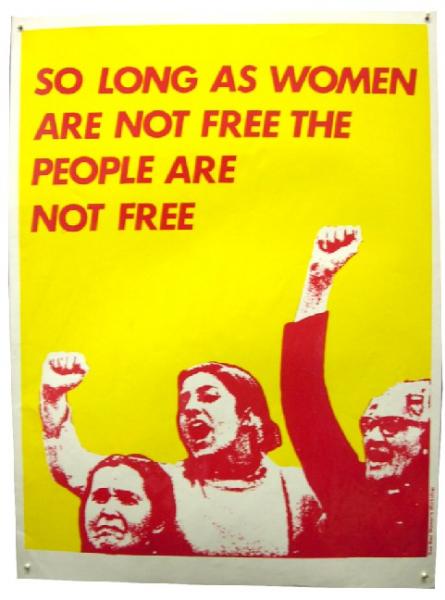
Acceptance of gender roles/ views of men and women in 2nd wave feminism
Conventional gender roles basically assign women to the home and men to work. Consequently, there are many fewer women in top-level jobs (there are only 15 female CEO's in the FTSE 100) as they are presumed to want to take maternity leave and are generally less aggressive than men so would find it harder to survive in the harsh business world. OK, I'll be honest, Google hasn't helped with the images- this is what came up when I Googled 'acceptance of gender roles':


What I found from my little bit of research is that actually gender roles are getting more hazy and less well-defined. While it is true that there is still a huge difference in some areas- particularly in the workplace where the pay gap between men and women is a rather large 19.9%- we are starting to become more accustomed to finding men and women in non-traditional gender roles, such as the increasing number of 'stay-at-home dads' and women being involved in professions previously dominated by men, such as the law and medicine.
Second wave feminism wanted women to be treated on an equal basis with men- it had the slogan 'feminism is the radical notion that women are people'. Therefore, it wanted women to have the same opportunities as men regarding work and lifestyle choices (they were particularly vocal on the issue of abortion).


Significant writers of fairy tales
The modern definition of a fairy tale is that it is simple and anonymous and written by a single identifiable author- though how would that mean it's anonymous? Anyway, many of the common fairy tales we see today are written by (well, attributed to) just a few authors. For example:
- The 18th century German Grimm Brothers (Jacob and Wilhelm) appear to be responsible for a number of famous fairy tales, including Hansel and Gretel, Rapunzel, Cinderella and Sleeping Beauty.
- Hans Christian Anderson was a 19th century Danish poet who wrote such tales as The Little Mermaid, Thumbelina and The Ugly Duckling.
- There was also a Russian folklorist who didn't specifically write fairy tales, but collected over 600 Russian folktales such as the Fox and the Geese and the Swan-Geese.
Though a number of fairy tales can be pinned down to be written by one author, many remain anonymous (like the Arabian Nights collection) because they have grown out of an oral tradition. Even when tales are attributed to specific authors this does not guarantee sole authorship as what they write down is often just one version of a story which may have been around for generations.
Saturday, 31 December 2011
How does the novel 'Dracula' represent issues of femininity?
Within ‘Dracula’ femininity appears to have clear boundaries. On the one hand women are innocent and virtuous before they have been lured towards evil by Dracula, whilst after they take on characteristics of ‘whores’ in that they are presented as manipulative Sirens; in particular Dracula’s Brides who have “voluptuous lips” which promote a “wicked, burning desire” from Harker. Though the males within the novel can have positive characteristics regardless of whether they are ‘good’ or ‘evil’- for example both Dracula and Van Helsing are intelligent- the women change completely, as though women can only follow the path of either being a ‘Madonna’ or ‘whore’.
Mina is presented as the ultimate symbol of feminine virtue in ‘Dracula’. Her devotion to her husband is at a parallel with the polygamous situation of Dracula’s Brides and Lucy’s three suitors. Her refusal to accept the ideals of the ‘New Woman’, mockingly saying how they would want to “do the proposing herself”, shows she remains conservative in terms of her distaste for the change in view of femininity and so keeps to the traditional values of a woman. Consequently, she must preserve her innocence to keep her reputation of being virtuous, so she resorts to daubing her feet with mud “so that as we went home no one, in case we should meet anyone, should notice my bare feet”. It is clear that she regards her reputation as her greatest asset since it would be the only thing of value she can own as for her the only duty she has is to serve her husband and he would also be judged partly through her reputation. Overall, Mina is shown to be the antithesis of the ‘New Woman’, and to some extent this could also be shown to be an opposition to Dracula’s Brides. They make the first move whilst seducing Harker, just as Mina is suggesting would happen with the new feminist movement, and their exclamation to the Count that “you yourself never loved; you never love!” may also share a similarity to the ‘New Woman’ movement as they do not immediately submit to Dracula’s commands. Mina’s innocence and her almost sacrificial virtue mean she can retaliate against Dracula’s control, so she is able to use their connection for her own advantage, almost showing that her purity shows she can combat evil even when it is supposed to be in control of her.
On the other hand, Dracula’s Brides appear to represent what women could become if they succumb to the lure of temptation. Once they have been brought under the control of Dracula they themselves become the tempters and use their attractions to lure men into the realm of evil. These are shown to be powerful in this respect as even the objective Van Helsing was “lapsing into sleep, the open-eyed sleep of one who yields to a sweet fascination” when opening their tombs. Their use of primeval attractions to gain the attention of men draws parallels with the Sirens, whose use of base attractions would culminate in the deaths of men. Essentially, Dracula’s Brides can be said to be a warning to women that this how they would end up if they were to take part in behaviour contradictory to what would ordinarily be expected of women. In particular, the inference of Dracula’s polygamist relations would suggest that this is more specifically a warning against sexual deviancy, as Dracula’s Brides have descended into what is presented as little more than prostitution. However, though these women have entirely fallen from virtue, they are still at the mercy of Dracula who exclaims to them “How dare you cast eyes on him when I had forbidden it?” which suggests that despite their ability to corrupt men they must still remain under some form of masculine control.
Women in ‘Dracula’ are all presented as needing protection in one form or another- even Dracula’s Brides rely on Dracula for nourishment and a home. Mina, and to some extent Lucy, are the ‘Madonnas’ of the novel and so are presented as being naïve and innocent meaning they are particularly susceptible to Dracula’s temptations. A woman’s virtue is valued highly, to such a degree that four men are willing to risk their lives to remove her ties to Dracula, with Quincey Morris saying “it was worth this to die!” upon noticing the burn from the communion wafer on Mina’s forehead had disappeared. This displays the male desire to protect women from the dangers of the world and to prevent them falling from grace at the hands of Dracula, who can be seen almost as an antichrist figure, representing the dangers that men could bring- possibly the lure of sexual desire. The protective feelings of the four men fighting to save Mina may not have been triggered by such desires, but rather more paternalistic emotions as her innocence may be equated to that of a child; one who needs to protected from such evils as are represented by Dracula. Though on the one hand Dracula can be said to primarily represent the dangers of deviant sexual behaviour, he could also be a symbol of the fear that it was believed could itself harm women; indeed the appearance of the wolf’s head in Lucy’s bedroom had killed her mother through shock. Therefore, the novel is suggesting that women require the help of men if they are to successfully repel the dangers they face, and that without their help they could easily face corruption or even death.
Femininity within the novel is also seen as being liable to corruption. Dracula only attempts to suck the blood of women; even with Harker he says to the Brides “when I am done with him, you shall kiss him at your will”, suggesting that he is not concerned with corrupting men. This may be a belief that women are easier to manipulate and seduce for Dracula, who could use the sexual tension between them. There was a similar case with Lucy when she was feeding from children on Hampstead Heath- that the children would be more susceptible to a woman who could be comparable to a maternal figure. Although Dracula achieves his corruption through sexual means, such as Lucy’s metaphorical rape at the church in Whitby, there is also a corruption of religion involved, which would further reduce the integrity of the women, as they are now not only unsuitable in the eyes of man for marriage, but now they are “unclean” in the eyes of God. That it is women who are tempted by Dracula draws parallels with Eve being first to taste the forbidden fruit in the Garden of Eden, which further shows that Dracula shares similarities with the Devil as he is prepared to corrupt women who were previously virtuous. Therefore, the corruption of women in the novel underlines Dracula’s position as an ‘antichrist’ to religion as well as their innocence as they are presented as easy prey for Dracula.
In conclusion, femininity within ‘Dracula’ is very clearly defined within the boundaries of religion. Those who have not been corrupted by Dracula are seen as virtually faultless in terms of the conventional view of a virtuous woman, for example Mina is entirely willing to serve her husband and takes care of Lucy whilst she is ill much as a mother would look after a child. On the other hand, Dracula’s temptation and corruption of Lucy shows how her femininity had been degraded after succumbing to his attacks, until eventually she is reducing to sucking the blood of children, whom she would ordinarily be expected to protect. This emphasises the power Dracula can hold over women, as he can override their maternal instincts. Consequently, ‘Dracula’ shows the ‘ideal’ woman who would herself be protective and virtuous, in other words one who would be the pure ‘Madonna’ type image, but also shows the antithesis of this, a woman who has been corrupted by the lure of Dracula’s physical presence which has resulted in a loss of innocence as well as a fall from God. Therefore, issues of femininity within ‘Dracula’ are largely black and white as women on the side of ‘good’ are seen to be caring, maternal figures while those who have turned over to the side of ‘evil’ have become temptresses whose have purely sexual desires and seek to seduce men through these base emotions.
Wednesday, 14 December 2011
Chapter 10/11
So I've just had to remind myself of what these chapters are about; Lucy has deteriorated in her illness (well, become more vampire-like but the characters don't know that) and Van Helsing has arrived and has quickly identified the problem. Then there's that weird bit about the wolf escaping and finally ends with Lucy's diary in which she describes a wolf's head smashing through her window and the consequent death of her mother.
I suppose the most significant part of these chapters is the arrival of Van Helsing. He comes to (try to) counteract the evil work done by Dracula, so is sort of a Christ-like figure. This interpretation is helped by his use of analogies (like Jesus' parables) and possibly his name; Abraham being the father of Christianity (as well as for Judaism and Islam). His knowledge is vastly superior to the others as he is aware of what is happening to Lucy well before the others, despite not being present at the start of the condition. That he's from Amsterdam may mean that a foreign invader has to be defeated by another foreigner, like fire fighting fire. Though there are many differences between Van Helsing and Dracula, there can also be said to be some similarities. Firstly, they are both clearly very intelligent and this means they are also evenly matched in this respect so to get around the Count's abilities Van Helsing has to keep an open mind in order to be a step ahead. Also, they are both determined; Dracula because he has to drink blood in order to survive and Van Helsing because of the danger Dracula poses to humanity.
Another thing that interested me (if that's really the right word) is the rather bizarre article about the wolf escaping. Obviously, this links in with Dracula's ability to command creatures of the night, as seen when Harker first arrives in Transylvania. Maybe this is supposed to parallel the command that Dracula has over Lucy (and later Mina) and that he can transform a reasonably tame wolf (in that it is not completely wild) into a vicious animal that can terrorise London's population.
I suppose the most significant part of these chapters is the arrival of Van Helsing. He comes to (try to) counteract the evil work done by Dracula, so is sort of a Christ-like figure. This interpretation is helped by his use of analogies (like Jesus' parables) and possibly his name; Abraham being the father of Christianity (as well as for Judaism and Islam). His knowledge is vastly superior to the others as he is aware of what is happening to Lucy well before the others, despite not being present at the start of the condition. That he's from Amsterdam may mean that a foreign invader has to be defeated by another foreigner, like fire fighting fire. Though there are many differences between Van Helsing and Dracula, there can also be said to be some similarities. Firstly, they are both clearly very intelligent and this means they are also evenly matched in this respect so to get around the Count's abilities Van Helsing has to keep an open mind in order to be a step ahead. Also, they are both determined; Dracula because he has to drink blood in order to survive and Van Helsing because of the danger Dracula poses to humanity.
Another thing that interested me (if that's really the right word) is the rather bizarre article about the wolf escaping. Obviously, this links in with Dracula's ability to command creatures of the night, as seen when Harker first arrives in Transylvania. Maybe this is supposed to parallel the command that Dracula has over Lucy (and later Mina) and that he can transform a reasonably tame wolf (in that it is not completely wild) into a vicious animal that can terrorise London's population.
Monday, 5 December 2011
Women in Dracula
The women in 'Dracula' (well tbh there's not that any of them) perhaps can be sorted into the whole Madonna/whore thing. There's Mina who's on the shy and retiring side and who can't wait to hear news of her dear Jonathan blah blah blah... yeah I know it kinda sickens me too. Anyway, I suppose her purity and virtue are supposed to be a contrast to Dracula's brides mentioned earlier in the novel, who it seems are trying to seduce Harker-perhaps tempting him to break his vow of chastity before marriage? It's not particularly surprising that the 'whore' label is established for these women who suck blood and are on the evil side; women in this situation are traditionally displayed as 'sirens', luring men to the dark side where they can have their way with them. As to Lucy, well, I'm not entirely sure of how we should view her. I mean, she is preyed upon by Dracula, who it seems only feasts on the pure and innocent, but then she's had three suitors at the same time, which to me is a little on the 'whore' side possibly?
I think the way women are portrayed in the novel is definitely influenced by the way Stoker viewed them. Clearly he disliked the rise of the feminist or 'New Woman' movement as the virtuous and oh so sweet Mina is very critical of them, sarcastically remarking how these women believe they should have an equal role to men in marriage and would even do the proposing themselves. The idea that women are either pure and virtuous or evil temptresses within a Gothic novel does not surprise me, as here Dracula must feed on the pure and, as seen in the case of Lucy, transforms them into this evil persona. On the other hand, men are of of little use to Dracula in this respect as they do not seduce women and bring them to the dark side but can still be used by him as menial servants, as seen with Renfield.
I think the way women are portrayed in the novel is definitely influenced by the way Stoker viewed them. Clearly he disliked the rise of the feminist or 'New Woman' movement as the virtuous and oh so sweet Mina is very critical of them, sarcastically remarking how these women believe they should have an equal role to men in marriage and would even do the proposing themselves. The idea that women are either pure and virtuous or evil temptresses within a Gothic novel does not surprise me, as here Dracula must feed on the pure and, as seen in the case of Lucy, transforms them into this evil persona. On the other hand, men are of of little use to Dracula in this respect as they do not seduce women and bring them to the dark side but can still be used by him as menial servants, as seen with Renfield.
Friday, 25 November 2011
How is Dracula written?
The interesting aspect of 'Dracula' is that it is written as though it is a compilation of various sources; journals belonging to Jonathan, Mina and Dr Seward, correspondence between some of the characters and a newspaper cutting. The effect of this is to present the events as real, as 'evidence' from factual sources is more likely to be believed. Though we are aware that the plot of 'Dracula' is fiction (...?), the presentation of these events as facts make it easier for us to suspend our disbelief and become drawn into the plot. Stoker's little pre-amble stating that the various pieces he has collected has been chosen "so that a history almost at variance with the possibilities of latter-day belief may stand forth as simple fact" adds that little bit extra fear as we read the novel since it helps for us to believe that the accounts could have been found by the author rather than written for a fictional purpose.
Being able to see what the characters have written allows us into their secrets; the journals and letters were not supposed to be seen by other people. The result of this is that we are able to gain a greater insight into the truth as they are revealing secrets they may not otherwise reveal; therefore we see what Lucy has been up to in her letter to Mina, saying "this is a secret" which we would not otherwise know about. That we are reading these private letters and accounts can be taken as an invasion of privacy as we are getting this information when the characters who are writing them are at their most vulnerable as they are writing their private thoughts and secrets. Consequently, a parallel could be shown between the blood sucking of the vampire and the reading of such personal information- both acts require the withdrawal of something so personal from when the victim (or writer) is at their most vulnerable.
In my opinion, the verisimilitude of 'Dracula' helps in getting more from the story as it helps in making it slightly more believable so you are able to be possibly more emotional about it (feel more fear) than if it was written as a typical narrative. That said, I don't think anyone would really believe that there was a Transylvanian vampire that could crawl down walls like a lizard and turn into a bat...

Being able to see what the characters have written allows us into their secrets; the journals and letters were not supposed to be seen by other people. The result of this is that we are able to gain a greater insight into the truth as they are revealing secrets they may not otherwise reveal; therefore we see what Lucy has been up to in her letter to Mina, saying "this is a secret" which we would not otherwise know about. That we are reading these private letters and accounts can be taken as an invasion of privacy as we are getting this information when the characters who are writing them are at their most vulnerable as they are writing their private thoughts and secrets. Consequently, a parallel could be shown between the blood sucking of the vampire and the reading of such personal information- both acts require the withdrawal of something so personal from when the victim (or writer) is at their most vulnerable.
In my opinion, the verisimilitude of 'Dracula' helps in getting more from the story as it helps in making it slightly more believable so you are able to be possibly more emotional about it (feel more fear) than if it was written as a typical narrative. That said, I don't think anyone would really believe that there was a Transylvanian vampire that could crawl down walls like a lizard and turn into a bat...

Friday, 18 November 2011
Sex and dreams
OK I'm gonna try and do this without any innuendos. According to Freud sexuality is a big part of our subconsciousness and we show it in jokes, slips of the tongue- known as Freudian slips like what happened with James Naughtie and Jeremy Hunt- and of course in our dreams. His idea was that our sexual desires are repressed and these are the times when we are able to express them. To be honest, though, it appears that anything dreamt can be interpreted as sexual- long pointy things (poles, stakes etc.), things that carry water (fountains, water pipes) and any kind of receptacle (a box, chalice or a type of transport) have all been interpreted by Freud as sexual symbols. Similarly, anything that involves penetration or power also has a sexual symbol, meaning any kind of weapon or firearm.
So what does this have to do with 'Dracula'? Well for a start he sinks his teeth into people's necks to suck their blood. This close body contact is, as no doubt Freud would have interpreted it, quite sexual and intimate. The part where Dracula's brides try to seduce Harker is kind of sexual-in the film this bit was shown as quite 'intimate' to say the least and if I remember correctly Dracula (in the film) is supposed to have some sort of fixation with Mina. Perhaps the level of sex and sexual suggestion is because it is a primal urge as is fear, a lot of this in a gothic novel, as well as survival; the Count has to suck blood in order to live. These two instincts seem to be closely linked in the novel, so it isn't surprising that there is quite a lot of sex next to the idea of life, or at least trying to sustain life.

So what does this have to do with 'Dracula'? Well for a start he sinks his teeth into people's necks to suck their blood. This close body contact is, as no doubt Freud would have interpreted it, quite sexual and intimate. The part where Dracula's brides try to seduce Harker is kind of sexual-in the film this bit was shown as quite 'intimate' to say the least and if I remember correctly Dracula (in the film) is supposed to have some sort of fixation with Mina. Perhaps the level of sex and sexual suggestion is because it is a primal urge as is fear, a lot of this in a gothic novel, as well as survival; the Count has to suck blood in order to live. These two instincts seem to be closely linked in the novel, so it isn't surprising that there is quite a lot of sex next to the idea of life, or at least trying to sustain life.

Wednesday, 16 November 2011
Vlad the Impaler
Vlad the Impaler (or Vlad Dracula to give his proper name) was a military leader in Transylvania who was also a knight of the Order of the Dragon- these people fought against the threat of Muslim Turks. His actions were pretty shocking, to say the least. He impaled hundreds of thousands of people, ranging from prisoners of war to anyone who he wanted to kill; basically he did this for fun. Perhaps this thrist for blood may have come from a bit of revenge for being used as collateral when his father made peache with the Turks? Regardless he was still a complete psycho- he was supposed to have drank the blood of his enemies (remind you of anyone?) and would dine next to his impaled victims and anyone who was disgusted at this would meet a similar fate. One day he even burnt to death thousands of people he saw as being a drain on his country's resources; he also had a cruel sense of humour, when two Turkish ambassadors refused to take of their hats (which was customary) Dracula had thier hats nailed to their heads so they need never take them off again. So all in all a sadistic maniac who you would definitely not want to meet in a dark alley.
Looking at Bram Stoker's Dracula and the real-life Vlad Dracula there are some close resemblances. For a start, they are both from Transylvania and both live in a 'Castle Dracula'. The (literal) thirst for blood is another comparison, but for the Count this is for survival, whereas Vlad was just insane. If anything, the reaserch I've carried out has found that Count Dracula is a really nice guy compared to his real-life counterpart. Sure, he may kill a few people and suck their blood, but he didn't exactly torture thousands of people for the sheer hell of it.
 Not to be confused with Vlad the Impala
Looking at Bram Stoker's Dracula and the real-life Vlad Dracula there are some close resemblances. For a start, they are both from Transylvania and both live in a 'Castle Dracula'. The (literal) thirst for blood is another comparison, but for the Count this is for survival, whereas Vlad was just insane. If anything, the reaserch I've carried out has found that Count Dracula is a really nice guy compared to his real-life counterpart. Sure, he may kill a few people and suck their blood, but he didn't exactly torture thousands of people for the sheer hell of it.

Vampires
I managed to find quite a lot of information on the interwebs about vampires- one website seemed overly keen, giving Latin names and talking about them as if they're real (which they're not...?). Anyway, one thing I noticed was the way vampires were percived has changed quite a bit over time. The first folk-tales talked about creatures prowling the night causing mishcief; these then evolved into the blood-sucking demon-like creature we often recognise as the archtypal vampire- basically Dracula. The modern vampires seem to have developed the sexual element and eternal youth bit- hence the over-emphasis on toplessessness and romance in teenage novels like Twilight and TV series like True Blood.
A few examples of the vampires I found:
Blood Vampire: the traditional view of a vampire, they gain energy from drinking blood (must be fresh blood to gain energy, not dead blood).
Homo Wampyrus Draco: Like Count Dracula, have retractable canines and can’t cope for long with sunlight. Most common of the vampires.
Homo Wampyrus Chrioptera: Can transform into vampire bats, very sensitive to sunlight and have pointy ears.
Homo Wampyrus Nosferatu: Are twisted and disfigured as they have fought the virus, obtain blood through stealth and may be able to shape-shift.
Classical vampires are "ageless", meaning their physical bodies do not age, but they can be killed.
Inheritor vampires: the vampire trait will lay dormant until around the age of 13 – 26 when the body releases a chemical which awakens the vampire and begins many physical changes in the body. As a result of this, most look around 19 - 20 years old their whole life. There must be one vampire parent. Inheritor vampires live to around 350-400 years old.
A few examples of the vampires I found:
Blood Vampire: the traditional view of a vampire, they gain energy from drinking blood (must be fresh blood to gain energy, not dead blood).
Homo Wampyrus Draco: Like Count Dracula, have retractable canines and can’t cope for long with sunlight. Most common of the vampires.
Homo Wampyrus Chrioptera: Can transform into vampire bats, very sensitive to sunlight and have pointy ears.
Homo Wampyrus Nosferatu: Are twisted and disfigured as they have fought the virus, obtain blood through stealth and may be able to shape-shift.
Classical vampires are "ageless", meaning their physical bodies do not age, but they can be killed.
Inheritor vampires: the vampire trait will lay dormant until around the age of 13 – 26 when the body releases a chemical which awakens the vampire and begins many physical changes in the body. As a result of this, most look around 19 - 20 years old their whole life. There must be one vampire parent. Inheritor vampires live to around 350-400 years old.
Wednesday, 2 November 2011
Is Faustus a gothic/tragic character?
So Dr. Faustus has sold his soul to the Devil and has a little demon (Mephistophilis) as a servant- sounds pretty gothic so far. In my opinion gothic is all about the dark side of things- so it might be the dark side of the day (night), the dark side of human emotion (evil) or in the case of Faustus the dark side of religion. He summons Mephistophilis in the first place by writing "Jehovah's name forward and backward anagrammatis'd", landing him on the 'evil' side of Christianity. Whilst siding with the Devil, Faustus has learnt the art of magic; associated with witches and pagans and so Faustus himself is connected with the supernatural. Though we think of the gothic as something to do with bats and vampires and haunted castles (or at least I do anyway), the story of Dr. Faustus can perhaps be seen as a gothic tale due to its elements of something other than human.
On the other hand, Dr. Faustus could also be perceived as a tragic character. To be honest, I felt pretty sympathetic towards him in his lat speech as he is desperate to have one last chance at redemption- "The Devil will come, and Faustus must be damn'd. O, I'll leap up to my God! Who pulls me down?" To me it seems he deeply regrets his pact with Lucifer, and maybe this is because he made this deal for the wrong reasons. He didn't really want to be damned forever; it was his arrogance that caused his desire to be superior to anyone else which led him into selling his soul and this could be said to be his hubris. He used Hell as a means to an end and failed to realise what that would inevitability lead to. The result of his eternal damnation in Hell was therefore a mistake as he could not see the gravity of the situation as he was blind to everything but the promise of great power.

On the other hand, Dr. Faustus could also be perceived as a tragic character. To be honest, I felt pretty sympathetic towards him in his lat speech as he is desperate to have one last chance at redemption- "The Devil will come, and Faustus must be damn'd. O, I'll leap up to my God! Who pulls me down?" To me it seems he deeply regrets his pact with Lucifer, and maybe this is because he made this deal for the wrong reasons. He didn't really want to be damned forever; it was his arrogance that caused his desire to be superior to anyone else which led him into selling his soul and this could be said to be his hubris. He used Hell as a means to an end and failed to realise what that would inevitability lead to. The result of his eternal damnation in Hell was therefore a mistake as he could not see the gravity of the situation as he was blind to everything but the promise of great power.
Overall I would say Dr. Faustus is a tragic character who has become entangled with the gothic. His hubris is the inevitable lead to his downfall as he can't see beyond his goal of massive power and has almost forced him into interfering with the evil side of Christianity. Gothic elements are definitely present, in the form of darkness and temptation, and these help portray Faustus as a character who is corrupted as a result of his own miscalculations, although he does not necessarily believe in this dark side of Christianity (unsurprising given he was a doctor of divinity). Therefore, I believe Faustus is a tragic character who is drawn into the realm of the gothic Hell and demons imagery through his hubris.

Subscribe to:
Posts (Atom)