So we're supposed to write about something interesting in 'The Tiger's Bride'. For me, one interesting element is the association of the Beast's loneliness with his wealth. He "bought solitude, not luxury, with his money", indicating that for him wealth is not something that can be compared to material beauty. Rather than providing for a large number of human guests that could be accommodated with his money, he instead opens up his dining room to be used by horses. He seems to find company in nature, as he covers up portraits whilst leaving the frescoes which are reminiscent of Paradise where animals are equal to men (and of course where the lion lies down with the lamb).
Therefore, it is clear that nature matters to the Beast much more so than his material possessions. He doesn't have any human servants, preferring to employ clockwork maids and his monkey manservant. Distancing himself from the human world is, ironically, achieved through his wealth enabling him to have the "megalomaniac citadel of his palazzo" but he doesn't enjoy any of the comfort this brings and resides in his "eyrie" with a "small fire in a small grate". For the Beast, wealth is associated with human contact so he avoids the visible signs as much as possible. This way, he can separate humanity from nature, which is regarded as 'true beauty'- seen as Beauty's human skin is turned into "a nascent patina of shining hairs".

Friday, 16 March 2012

Tuesday, 6 March 2012
Characters of commedia dell'arte
Commedia dell'arte originated in Italy to counter the strict conventions of classic theatre. Instead, commedia dell'arte abandoned such rules and allowed actors room for improvisation and brought in characters who were loud and colourful, rather than the flat characters of classical theatre. There are a variety of these characters, who I suppose can be called caricatures of certain people and classes.
Harlequin: the best known of these stock characters with his patched outfit and mask. He is basically a trickster, and, though he is poor, is able to survive through his wit and creativity.
Scaramouche (Scaramouche, can you do the Fandango?): a captain who doesn't seem to do much fighting (his name meaning small,fast fray) and is more of a ladies man. He is clever (but also lucky) enough to escape out of any awkward situations he finds himself in and hand the blame to somebody else.
Pantaloon: an old, greedy merchant who does all he can to keep his money. He is opposite to the Harlequin, who is young and poor but is able to trick the Pantaloon out of his gold.
The Doctor: known as Balanzone, he is rich, fat and thinks he knows everything. His meaningless dialogues may contain (wrong) citations in Latin or Greek and he impersonates any important person, whether it is a doctor, or more likely a lawyer or judge. This character allows a break in the running of the commedia dell'arte and is the sort of 'know-it-all' character that the audience can resent.
Innamorati: pair of lovers (often the son and daughter of the Pantaloon and the Doctor) who are important in the commedia dell'arte as their situations (eg. contrasted love and envy) give rise for the entrance of the more comedic characters, in particular the Harlequin and Pantaloon.
Harlequin: the best known of these stock characters with his patched outfit and mask. He is basically a trickster, and, though he is poor, is able to survive through his wit and creativity.
Scaramouche (Scaramouche, can you do the Fandango?): a captain who doesn't seem to do much fighting (his name meaning small,fast fray) and is more of a ladies man. He is clever (but also lucky) enough to escape out of any awkward situations he finds himself in and hand the blame to somebody else.
Pantaloon: an old, greedy merchant who does all he can to keep his money. He is opposite to the Harlequin, who is young and poor but is able to trick the Pantaloon out of his gold.
The Doctor: known as Balanzone, he is rich, fat and thinks he knows everything. His meaningless dialogues may contain (wrong) citations in Latin or Greek and he impersonates any important person, whether it is a doctor, or more likely a lawyer or judge. This character allows a break in the running of the commedia dell'arte and is the sort of 'know-it-all' character that the audience can resent.
Innamorati: pair of lovers (often the son and daughter of the Pantaloon and the Doctor) who are important in the commedia dell'arte as their situations (eg. contrasted love and envy) give rise for the entrance of the more comedic characters, in particular the Harlequin and Pantaloon.
Tuesday, 21 February 2012
The Bloody Chamber- uh, about the bloody chamber
So I suppose the thing about this section that most captured my imagination (that's a bit of a stretch, but anyways) is the part where the narrator discovers the bloody chamber itself. Her discovery is opened by a quote from her husband's favorite poet- "There is a striking resemblance between the act of love and the ministrations of a torturer", which seems to suggest that the bloody chamber is an extension of the bed chamber. Furthermore, he has the position of a torturer in both worlds; that of his public image (his mask) and that of his true self which he takes great depths in order to hide. As a 'torturer' he is able to maintain dominance through inflicting pain, an in the bed chamber this 'pain' can be seen as the dishevelment of his young wife's virginity.
This room is described as his 'soul' so it is a reflection of his true self. It is dark, indicating this secret has to be hidden, but it is within the confines of the castle walls (although it has to be reached by a long, winding corridor) so it is still in his 'territory'- it is simply out of the way and is (normally) only accessed by the husband. The "absolute darkness" of the chamber is juxtaposed by the actions of the wife in switching on every light in the castle, which alleviates some of her fear. This may represent the contrast between her world and his, that she welcomes daylight and wants to see everything, while he wants to hide his true self in the dark recesses of his world of the castle.
This room is described as his 'soul' so it is a reflection of his true self. It is dark, indicating this secret has to be hidden, but it is within the confines of the castle walls (although it has to be reached by a long, winding corridor) so it is still in his 'territory'- it is simply out of the way and is (normally) only accessed by the husband. The "absolute darkness" of the chamber is juxtaposed by the actions of the wife in switching on every light in the castle, which alleviates some of her fear. This may represent the contrast between her world and his, that she welcomes daylight and wants to see everything, while he wants to hide his true self in the dark recesses of his world of the castle.
Thursday, 9 February 2012
Mulvey's visual pleasure and narrative cinema
Laura Mulvey is a feminist film theorist best known for this paper on visual pleasure and narrative cinema which has an emphasis on psychoanalysis. Frankly I don't believe a word of it, but that's psychoanalysis for you. So according to Mulvey a patriarchal society has structured the form of film. In narrative cinema, the women portrayed represent a castration threat with their lack of a penis. Furthermore, it is because they cannot escape this position of causing men to have a fear of this castration that they develop a desire to have a penis- 'penis envy' Freud calls it. Mulvey goes on to say that the erotic aspect of cinema is found through scopophilia, which is when the audience experiences the pleasure of looking, rather than being the object looked at. This is where people begin to be treated as objects as has a tendency to lead to perversion as some may gain sexual gratification from watching a person and treating them as an object.
The separation of the film and the audience plays for the audience a voyeuristic fantasy and the position of the audience watching the film allows exhibitionism where the film being watched is 'repressed' by the viewing audience. Mulvey argues that cinema is essentially a primordial wish for pleasurable looking and that film shows a love affair/ despair relationship between image and self-image (in other words, what we are versus what we see in the mirror). There is an identification with the on-screen image, though there is also the experience whereby the erotic identity of the image becomes separated from the image itself.
Mulvey mentions that women in film basically have an exhibitionist role and that men have an active role while women remain passive. The 'show-girl' imagery signifies male desire, which is found in many films where the hero/heroine develop a romantic relationship; Mulvey points out that in certain 'buddy movies' there is a case for homosexual eroticism between the lead male roles so no such distraction interferes with the story. Nevertheless, women are seen as the erotic object for both the characters and the audience as the (male) audience are able to link themselves with the power of the male protagonist since his power is similar to the active power of the erotic look. As a result, the audience are able to indirectly possess the heroine, as the hero does when they develop a romantic relationship. There is a view that, as the female figure represents the castration complex the male unconscious wants to escape this fear through sadism, by investigating the woman (if you know what I mean) or by developing a fetish by giving the female star cult status. There is an example of this in the films of the German actress Marlene Dietrich, where the erotic imagery occurs whilst the love interest is off-screen.
Examples of scopophilic eroticism can be seen in some of Hitchcock's films, where the erotic drives of the male characters put them in compromised situations. The power of the male characters is evoked by the guilt of the woman because of the castration complex and the legal right- men are (mostly) seen to be on the right side of the war (eg. a policeman in Vertigo) whilst the women are on the wrong side.
Overall, women are passive raw material for the active gaze of men. As a representation they signify castration which can be circumvented by voyeurism or developing this scopophilic view. As cinema has the effects of the camera and distance between the audience and what it sees, the erotic look towards a scene can be varied or exposed, which makes it different from the more direct viewing of theatre, strip-tease and shows. Cinema meets the neurotic needs of the male ego, though the verisimilitude presented by the camera deny the erotic look of the audience the intrinsic power. Additionally the camera's ability to be able to conceal the castration fear and display a direct erotic image freezes the look of the spectator and prevents him from distancing himself from the image he sees.
The separation of the film and the audience plays for the audience a voyeuristic fantasy and the position of the audience watching the film allows exhibitionism where the film being watched is 'repressed' by the viewing audience. Mulvey argues that cinema is essentially a primordial wish for pleasurable looking and that film shows a love affair/ despair relationship between image and self-image (in other words, what we are versus what we see in the mirror). There is an identification with the on-screen image, though there is also the experience whereby the erotic identity of the image becomes separated from the image itself.
Mulvey mentions that women in film basically have an exhibitionist role and that men have an active role while women remain passive. The 'show-girl' imagery signifies male desire, which is found in many films where the hero/heroine develop a romantic relationship; Mulvey points out that in certain 'buddy movies' there is a case for homosexual eroticism between the lead male roles so no such distraction interferes with the story. Nevertheless, women are seen as the erotic object for both the characters and the audience as the (male) audience are able to link themselves with the power of the male protagonist since his power is similar to the active power of the erotic look. As a result, the audience are able to indirectly possess the heroine, as the hero does when they develop a romantic relationship. There is a view that, as the female figure represents the castration complex the male unconscious wants to escape this fear through sadism, by investigating the woman (if you know what I mean) or by developing a fetish by giving the female star cult status. There is an example of this in the films of the German actress Marlene Dietrich, where the erotic imagery occurs whilst the love interest is off-screen.
Examples of scopophilic eroticism can be seen in some of Hitchcock's films, where the erotic drives of the male characters put them in compromised situations. The power of the male characters is evoked by the guilt of the woman because of the castration complex and the legal right- men are (mostly) seen to be on the right side of the war (eg. a policeman in Vertigo) whilst the women are on the wrong side.
Overall, women are passive raw material for the active gaze of men. As a representation they signify castration which can be circumvented by voyeurism or developing this scopophilic view. As cinema has the effects of the camera and distance between the audience and what it sees, the erotic look towards a scene can be varied or exposed, which makes it different from the more direct viewing of theatre, strip-tease and shows. Cinema meets the neurotic needs of the male ego, though the verisimilitude presented by the camera deny the erotic look of the audience the intrinsic power. Additionally the camera's ability to be able to conceal the castration fear and display a direct erotic image freezes the look of the spectator and prevents him from distancing himself from the image he sees.
Tuesday, 7 February 2012
Bluebeard in exactly 314 words
Bluebeard is a French aristocrat who, though he was immensely wealthy and charming, was feared because of his blue beard. He had been married a few times before to young, beautiful women who had all died suddenly, so the local girls became afraid of his ‘bad luck’ and would not marry him, despite his charms. Eventually, he asked a neighbour if he could marry one of her two daughters, but both were reluctant to go near him. However, he managed to persuade the youngest sister to visit him at the castle where he laid out a tremendous feast which helped persuade her to marry him. Shortly after her arrival at the castle he told her he must leave the country for a few weeks, but gave her the keys to every room in the house- including one to a small room beneath the castle which he made her swear that she will not enter. She is overcome with curiosity to find out what is in this room, and (despite her sister’s warnings) opens the door. She finds the bodies of Bluebeard’s wives hanging on hooks and drops the key onto the blood-soaked floor, staining it with blood that will not wash off. She tells her sister and they decide to flee, but Bluebeard returns and sees the blood on the key which proves his wife had disobeyed him. He immediately resolves that he must kill her but before beheading her he allows her fifteen minutes to say her prayers, which allowed time for her two brothers to arrive. Just before Bluebeard reaches the sisters with his axe, the brothers enter the castle and kill him. His wife, as his only heir, inherits his vast wealth which she uses to pay a dowry for her sister, her brothers’ captains’ commissions and to marry a good man who makes her forget her terrible encounter with Bluebeard.
Tuesday, 31 January 2012
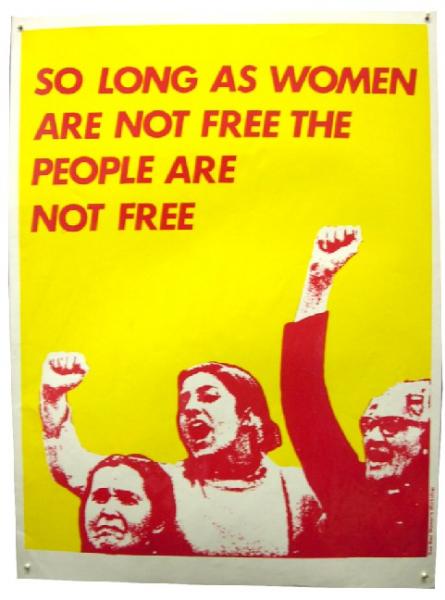
Acceptance of gender roles/ views of men and women in 2nd wave feminism
Conventional gender roles basically assign women to the home and men to work. Consequently, there are many fewer women in top-level jobs (there are only 15 female CEO's in the FTSE 100) as they are presumed to want to take maternity leave and are generally less aggressive than men so would find it harder to survive in the harsh business world. OK, I'll be honest, Google hasn't helped with the images- this is what came up when I Googled 'acceptance of gender roles':


What I found from my little bit of research is that actually gender roles are getting more hazy and less well-defined. While it is true that there is still a huge difference in some areas- particularly in the workplace where the pay gap between men and women is a rather large 19.9%- we are starting to become more accustomed to finding men and women in non-traditional gender roles, such as the increasing number of 'stay-at-home dads' and women being involved in professions previously dominated by men, such as the law and medicine.
Second wave feminism wanted women to be treated on an equal basis with men- it had the slogan 'feminism is the radical notion that women are people'. Therefore, it wanted women to have the same opportunities as men regarding work and lifestyle choices (they were particularly vocal on the issue of abortion).


Significant writers of fairy tales
The modern definition of a fairy tale is that it is simple and anonymous and written by a single identifiable author- though how would that mean it's anonymous? Anyway, many of the common fairy tales we see today are written by (well, attributed to) just a few authors. For example:
- The 18th century German Grimm Brothers (Jacob and Wilhelm) appear to be responsible for a number of famous fairy tales, including Hansel and Gretel, Rapunzel, Cinderella and Sleeping Beauty.
- Hans Christian Anderson was a 19th century Danish poet who wrote such tales as The Little Mermaid, Thumbelina and The Ugly Duckling.
- There was also a Russian folklorist who didn't specifically write fairy tales, but collected over 600 Russian folktales such as the Fox and the Geese and the Swan-Geese.
Though a number of fairy tales can be pinned down to be written by one author, many remain anonymous (like the Arabian Nights collection) because they have grown out of an oral tradition. Even when tales are attributed to specific authors this does not guarantee sole authorship as what they write down is often just one version of a story which may have been around for generations.
Subscribe to:
Posts (Atom)